
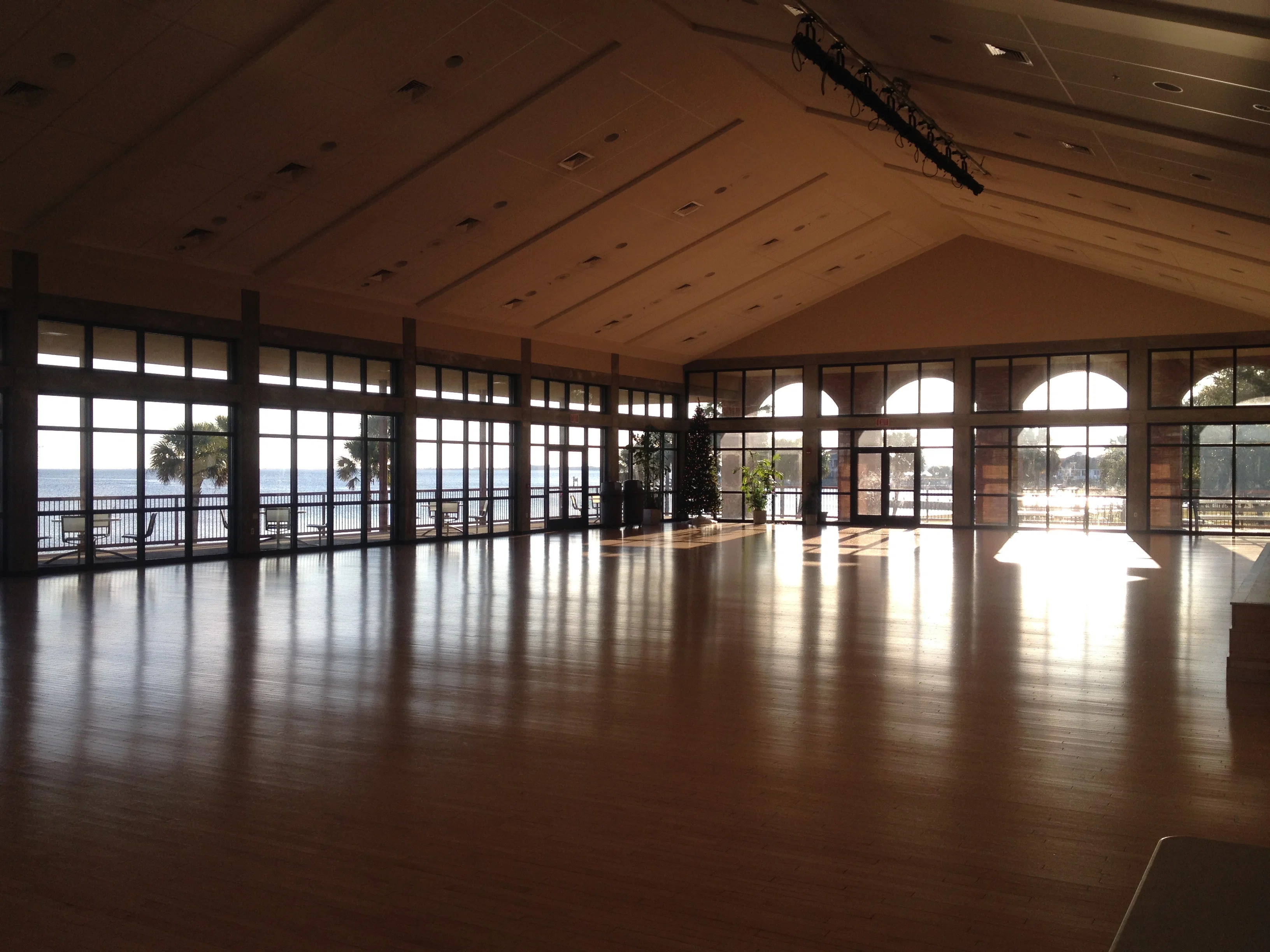
Sanders Beach Corinne Jones Resource Center is a community-serving room first.
The useful read is neighborhood accessibility, practical public gathering use, and a venue that works by being serviceable and grounded rather than by projecting large-scale entertainment energy.
That makes it different from Pensacola Blue Wahoos Stadium, where the event inherits a much more public, sports-anchored, waterfront-showcase identity from the building itself.
Execution priorities for Sanders Beach-Corinne Jones Resource Center
- Community-room practicality and neighborhood access
- Public-service utility over spectacle
- A venue that works through grounded gathering use
About Sanders Beach-Corinne Jones Resource Center
Waterfront city venue near downtown Pensacola with a large ballroom, breakout rooms, kitchen access, and outdoor event space for conferences, dinners, and sponsor receptions.
Located at 913 South I Street, Waterfront / Downtown South.
Running a project here means working against the venue's own exhibitor manual, dock windows, and service-order deadlines. Those details are confirmed before any build commits to fabrication.
What drives the Pensacola calendar
Pensacola is a working trade show market.
Alabama's Beaches markets a nearby overflow bench of group venues, including Perdido Beach Resort with 45,000 square feet of flexible meeting space, the Lodge at Gulf State Park with 40,000 square feet, and the Orange Beach Event Center with 18,000 square feet configured for conferences and tradeshows.
Operational rules on the Pensacola floor
Pensacola floor operations follow the venue's own manual.
Beach-resort and event-center venues around Pensacola and Orange Beach emphasize event planners, conference services, catering, and AV support, but the public-facing sources reviewed do not verify blanket union-only or blanket non-union conditions across the market.
What's included in the project scope
a bad one has many, because they weren't.
Those run alongside the engagement rather than inside it.
What an engagement actually looks like
Venue coordination comes next.
Install days are owned by a single on-site lead.
During show hours, the booth is a live operating space.
That document drives the next booking.
What it costs and how fast it moves
Cost scales with how it is built, how big it is, what the venue charges for its own services, what the graphics look like, how far the crates travel, and how many days the team stays on-site.
Lead time drives everything. Custom: 16 to 20 weeks. Rental: 8 to 12.
Outcomes we optimize for
Trade show ROI is measured at the lead and pipeline level.
A week after the show, the booth's actual floor performance is already clearer than any pre-show projection. We document those observations alongside the technical closeout so the next cycle inherits real signal, not nostalgia.
How we're built to run your project
Trade Show Services of Pensacola keeps the work local.
The difference from a national vendor shows up at the dock.
Frequently asked questions
How does labor work in Pensacola?
It runs venue by venue.
How much lead time is ideal?
Custom builds run best with 16 to 20 weeks of lead time. Rentals take 8 to 12 weeks.
What information kicks off a project?
The show, the venue, the booth number, the dates, and a target budget range. From those, an initial scope and a realistic cost come back within a few days.
Who runs the booth on-site?
One named show-site lead runs the install, the show hours, and the strike. That person carries the floor plan and the punch list from crates to doors and reports up once a day.
Can the booth travel to the next city on our calendar?
Same structure, swappable graphics, standard crates.
What happens if something breaks during show hours?
The on-site lead handles it.