
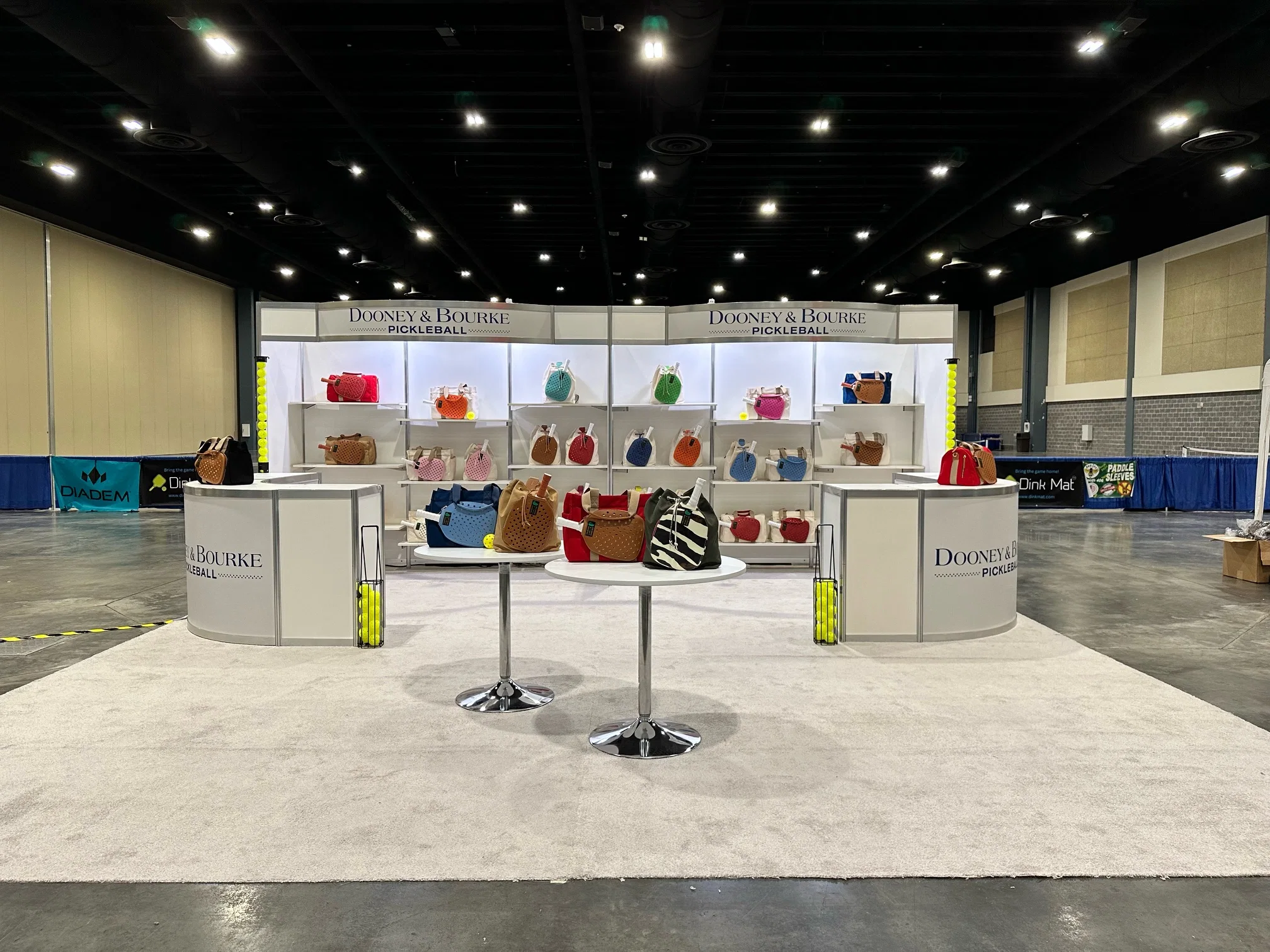
Exhibitor-appointed-contractor coordination is a control-and-authorization assignment.
The service depends on who is allowed to do what, how the venue and general-contractor rules apply, and how the exhibitor's chosen team moves through the room without creating scope confusion or service conflicts.
That makes it different from modular exhibit systems, which are about the booth package itself and how it adapts between events rather than about managing the contractor relationship around the build.
Execution priorities for Exhibitor-Appointed Contractor Coordination
- Authorization, scope clarity, and contractor handoffs
- Venue and general-contractor rule alignment
- A cleaner operating path for the exhibitor's chosen team
Pensacola trade show market
Trade shows in Pensacola move fast. Major venues book out months in advance, freight windows run tight, and the exhibitors who win their weeks are the ones who arrive with a plan already in hand.
Exhibitors pulling back on budget in Pensacola still have to show up in the same booth neighborhoods as their competitors. Scope gets tighter; standards don't. The booths that land well are the ones built on a specific plan, not a generic template.
The Alabama Beaches convention calendars show repeated group blocks at Perdido Beach Resort, the Lodge at Gulf State Park, SpringHill Suites at the Wharf, and Orange Beach Event Center, reinforcing a steady schedule of small and mid-sized meetings within realistic drive time of Pensacola, which sets the practical ceiling for a booth program working the market.
When Pensacola buyers need a significantly larger convention footprint, downtown Mobile offers the closest true spillover option via the Arthur R. Outlaw Mobile Convention Center, which Visit Mobile describes as a 317,000-square-foot riverfront facility with 100,000 square feet of exhibit halls — a useful reference point when sizing a project.
Where Pensacola shows actually happen
The building matters more than almost anything else in a trade show plan. A few Pensacola venues carry most of the calendar.
Across the Pensacola venue set, what changes between buildings are the labor model, the rigging approval path, the drayage setup, and the published move-in window. The plan has to match the specific building.
Sanders Beach-Corinne Jones Resource Center: waterfront city venue near downtown Pensacola with a large ballroom, breakout rooms, kitchen access, and outdoor event space for conferences, dinners, and sponsor receptions.
Who handles what during the Pensacola install window
Most of what goes wrong on a Pensacola install traces back to assumptions about labor. Staying inside the venue's published rules for the specific show prevents it.
Practically, that means pulling the current exhibitor manual for every show and confirming a handful of items in writing: which tasks the venue's house crews cover, which tasks the show's general contractor covers, and what an exhibitor or their appointed contractor can handle without escalation.
Dedicated event services, operations, production, engineering, and food-and-beverage staff, reinforcing the need to describe venue execution as coordinator-led and facility-managed.
The main Pensacola event areas
The University and Northeast Pensacola area runs through Cordova Park, Pensacola, FL, Scenic Heights, Pensacola, FL, Ferry Pass, FL, Ensley, FL. The UWF Conference Center and airport-adjacent commercial areas give this cluster value for academic events, training programs, and buyers who want easier suburban access than the downtown core.
Downtown Pensacola and Waterfront — Downtown Pensacola, FL, North Hill, Pensacola, FL, East Hill, Pensacola, FL — is a different environment. This cluster holds the Bay Center, Blue Wahoos Stadium, Historic Pensacola venues, and downtown private-event inventory. It is the best local fit for trade-show receptions, sponsor activations, smaller conferences, and multi-stop downtown programs.
Line items on a typical project
Exhibitor-appointed contractor coordination projects typically include design work, fabrication or rental sourcing, graphics production, show-service paperwork, freight, install, show-hours coverage, and strike.
What shows up in most budgets: structure, graphics, AV, show-service orders through the venue, labor, freight, supervision days, and closeout. Individual projects layer or remove items based on scope.
The handoffs on an the coordination project matter almost as much as the line items. Design has to hand a build-ready drawing to fabrication. Fabrication has to hand a pre-built, dry-fitted booth to crating. The crater has to hand a labeled, manifested shipment to the carrier. Every handoff is a place quality can drop.
Multi-show programs add asset management: storage, refurbishment, graphic swaps, and scheduled re-kitting so the booth rolls cleanly from Pensacola to the next city on the calendar.
A clean scope definition also calls out what isn't included: show organizer fees, client staff travel, and anything the client already has under contract (lead capture platforms, CRM integrations, promotional giveaways). Those run alongside the engagement rather than inside it.
From first call to strike
Every engagement begins the same way. The venue, the show dates, the footprint, and the target outcome go on the table first. From those four inputs, a real plan can be built.
Venue coordination comes next.
Production brings the plan into physical form: fabrication, graphics, AV, rentals, and the named lead who will run the floor.
Install days are owned by a single on-site lead. That person carries the plan, works the punch list in real time, and reports up once a day with real status.
During show hours, the booth is a live operating space.
Closeout is tight: strike, crate, manifest, storage designation, and a written post-show report delivered within a day. That document drives the next booking.
Budget and timeline
Cost scales with how it is built, how big it is, what the venue charges for its own services, what the graphics look like, how far the crates travel, and how many days the team stays on-site.
Lead time drives everything. Custom: 16 to 20 weeks. Rental: 8 to 12. Under 4 weeks is possible but narrows choices and raises cost.
What a successful project looks like
Trade show ROI is measured at the lead and pipeline level. The show-floor execution either protects or undermines those numbers.
A week after the show, the booth's actual floor performance is already clearer than any pre-show projection. We document those observations alongside the technical closeout so the next cycle inherits real signal, not nostalgia.
The advantage of a local Pensacola team
Trade Show Services of Pensacola keeps the work local. Design, build, and install share the same team and the same playbook, which is how quality survives across a show week.
The difference from a national vendor shows up at the dock.
Clients who run repeat programs across multiple dates end up paying less per event when the same team handles everything. Less re-briefing, less re-training, less re-checking — the operational overhead drops year over year.
Frequently asked questions
Do you work at Saenger Theatre Pensacola?
Yes. Historic 1,806-seat theater in downtown Pensacola suited to general sessions, keynote presentations, awards programs, and conference-adjacent entertainment.
How does labor work in Pensacola?
It runs venue by venue. Arthur R. Outlaw Mobile Convention Center publishes exhibitor guidelines that require service ordering through exhibitor-services channels, provide an on-site service desk during load-in, and apply venue-specific fire-code and approval rules.
How much lead time is ideal?
Custom builds run best with 16 to 20 weeks of lead time. Rentals take 8 to 12 weeks.
What information kicks off a project?
The show, the venue, the booth number, the dates, and a target budget range. From those, an initial scope and a realistic cost come back within a few days.
Who runs the booth on-site?
One named show-site lead runs the install, the show hours, and the strike. That person carries the floor plan and the punch list from crates to doors and reports up once a day.
Can the booth travel to the next city on our calendar?
Same structure, swappable graphics, standard crates.
What happens if something breaks during show hours?
The on-site lead handles it.