
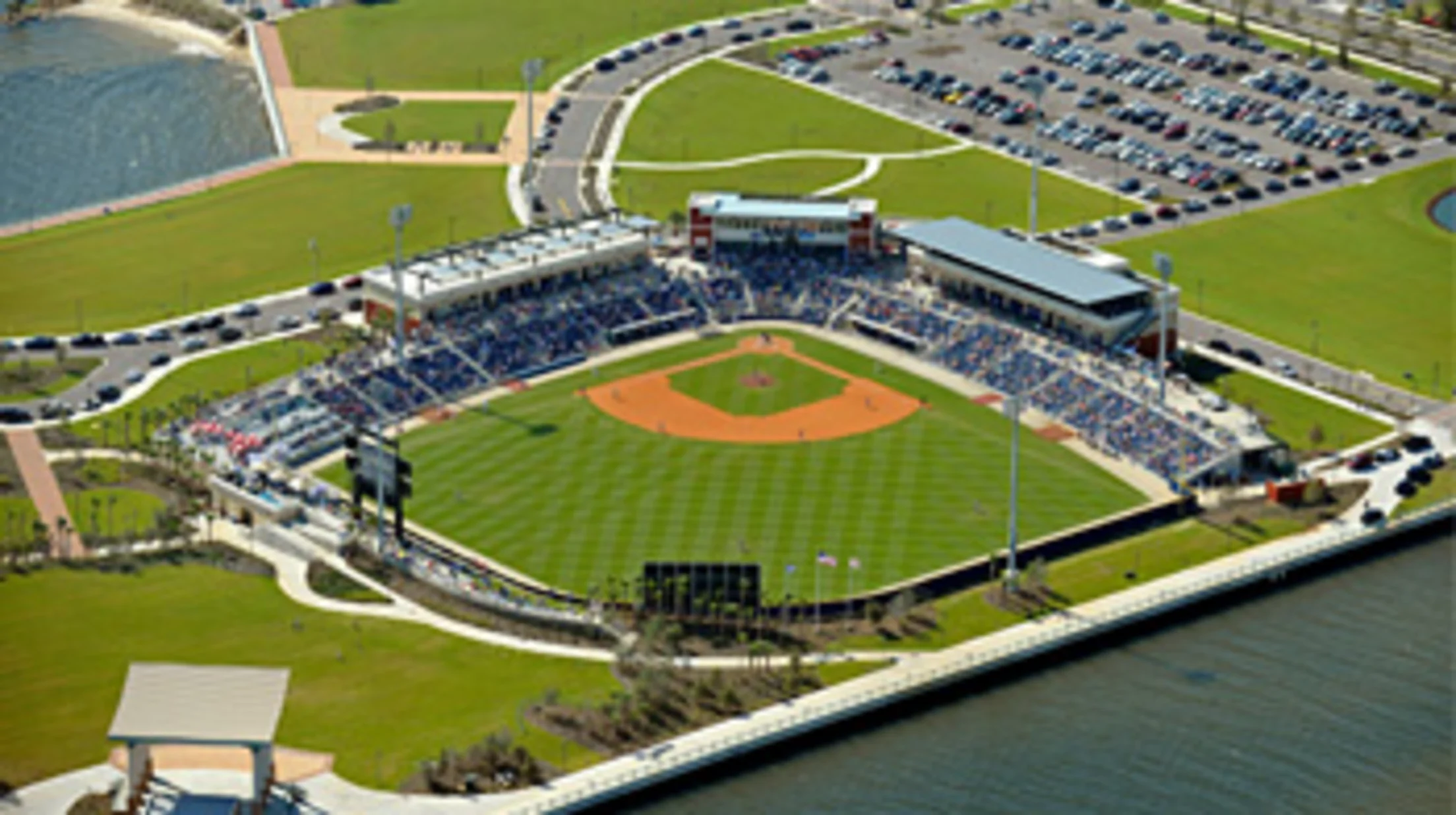
Pensacola Blue Wahoos Stadium changes the event because the building already carries sports-energy scale, waterfront visibility, and a stronger public-arrival identity before the program even starts.
The useful read is a venue that behaves more like an entertainment anchor than like a neutral meeting room, with bigger sightlines, more public-facing logistics, and a stronger sense of spectacle built into the site.
That makes it different from Sanders Beach Corinne Jones Resource Center, where the event is shaped more by community utility and neighborhood access than by waterfront showmanship.
Execution priorities for Pensacola Blue Wahoos Stadium
- Waterfront stadium visibility and larger public arrival flow
- Field-facing entertainment energy and bigger sightlines
- A venue where scale and spectacle are part of the operating plan
Pensacola trade show market
When Pensacola buyers need a significantly larger convention footprint, downtown Mobile offers the closest true spillover option via the Arthur R. Outlaw Mobile Convention Center, which Visit Mobile describes as a 317,000-square-foot riverfront facility with 100,000 square feet of exhibit halls — a useful reference point when sizing a project.
Pensacola Bay Center remains the core indoor venue in the target market, with twelve meeting rooms and more than 20,000 square feet of arena floor space marketed for trade shows, conventions, exhibits, lectures, and banquets, which sets the practical ceiling for a booth program working the market.
Who handles what during the Pensacola install window
On most Pensacola shows, the labor plan takes one call with the venue's exhibitor services desk, one review of the current manual, and one email to the general contractor. Skipping any of those three is usually where problems start.
Pensacola Bay Center's public booking language is event-manager driven rather than union-label driven. The venue explicitly says its meeting services department helps with move-in, move-out, staffing, and AV or telephone orders.
What's included in the project scope
Projects at the stadium typically include design work, fabrication or rental sourcing, graphics production, show-service paperwork, freight, install, show-hours coverage, and strike.
Individual projects layer or remove items based on scope.
Scope boundary is as important as scope inclusion.
From first call to strike
Venue coordination comes next.
Install days are owned by a single on-site lead.
During show hours, the booth is a live operating space.
That document drives the next booking.
Budget and timeline
Cost scales with how it is built, how big it is, what the venue charges for its own services, what the graphics look like, how far the crates travel, and how many days the team stays on-site.
Lead time drives everything. Custom: 16 to 20 weeks. Rental: 8 to 12.
What a successful project looks like
Trade show ROI is measured at the lead and pipeline level.
A week after the show, the booth's actual floor performance is already clearer than any pre-show projection. We document those observations alongside the technical closeout so the next cycle inherits real signal, not nostalgia.
The advantage of a local Pensacola team
Trade Show Services of Pensacola keeps the work local.
The difference from a national vendor shows up at the dock.
Pensacola Blue Wahoos Stadium at a glance
Pensacola Blue Wahoos Stadium is one of the venues we work on regularly in Pensacola.
Located at 351 W. Cedar St., Community Maritime Park / Waterfront.
On any the stadium project, the first step is pulling the current exhibitor manual and confirming the service-order deadlines, dock windows, and any rigging approval path. Design decisions come after those are locked.
Frequently asked questions
How does labor work in Pensacola?
It runs venue by venue.
How much lead time is ideal?
Custom builds run best with 16 to 20 weeks of lead time. Rentals take 8 to 12 weeks.
What information kicks off a project?
The show, the venue, the booth number, the dates, and a target budget range. From those, an initial scope and a realistic cost come back within a few days.
Who runs the booth on-site?
One named show-site lead runs the install, the show hours, and the strike. That person carries the floor plan and the punch list from crates to doors and reports up once a day.
Can the booth travel to the next city on our calendar?
Same structure, swappable graphics, standard crates.
What happens if something breaks during show hours?
The on-site lead handles it.