
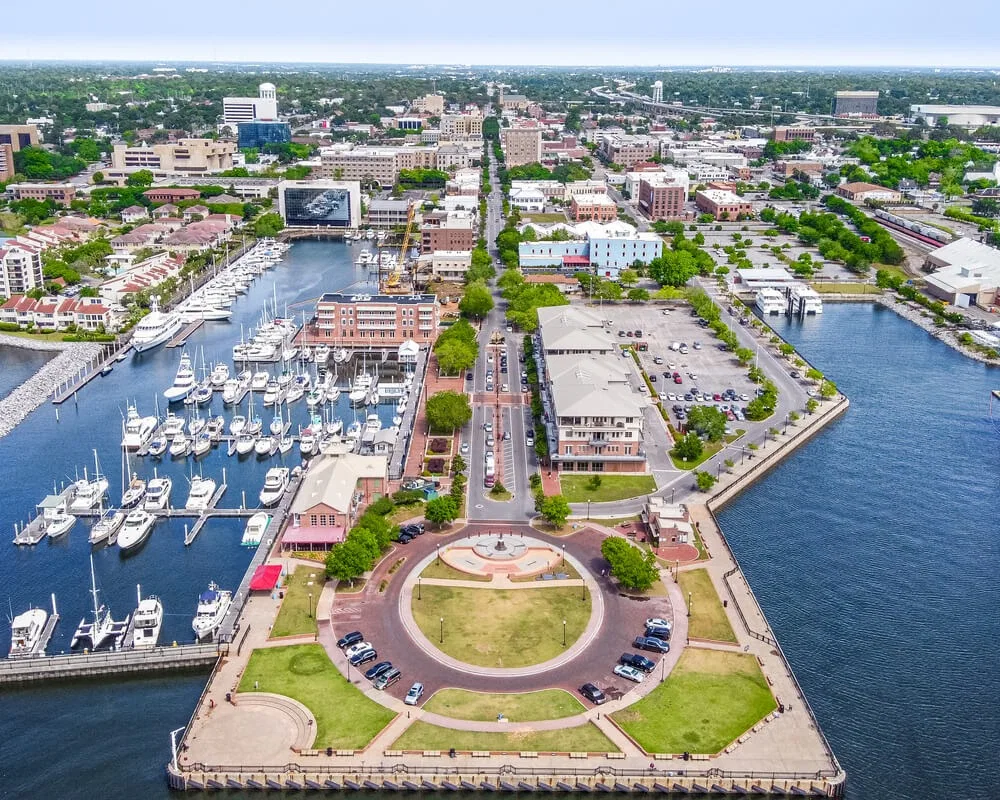
Beulah carries more edge-of-market behavior than the more central Pensacola support districts do.
The useful read is outward growth, newer development spread, and a setting where approach paths and travel assumptions matter more because the event is operating farther from the older urban core.
That makes it distinct from Brent, where the value is more about central-access practicality than edge-of-market sprawl.
Execution priorities for Beulah, FL
- Edge-of-market growth-corridor movement
- Newer development spread and longer approach assumptions
- Planning that respects a farther-west local pattern
Trade show work in Beulah, FL
Beulah, FL falls inside the Pensacola service footprint for trade show projects.
Projects in Beulah, FL get scoped the same way as work in the Pensacola core: venue, dates, footprint, and budget frame first, then the build plan. The difference is usually in freight routing and which nearby buildings are the closest fit.
What drives the Pensacola calendar
Scope gets tighter; standards don't.
When Pensacola buyers need a significantly larger convention footprint, downtown Mobile offers the closest true spillover option via the Arthur R. Outlaw Mobile Convention Center, which Visit Mobile describes as a 317,000-square-foot riverfront facility with 100,000 square feet of exhibit halls.
The buildings that host Pensacola events
the plan has to match the specific building.
Portofino Island Resort and Spa.
How Pensacola floor operations work
Labor in Pensacola runs venue-by-venue, not citywide.
Dedicated event services, operations, production, engineering, and food-and-beverage staff, reinforcing the need to describe venue execution as coordinator-led and facility-managed.
Line items on a typical project
The handoffs on a project in the fl matter almost as much as the line items. Design has to hand a build-ready drawing to fabrication. Every handoff is a place quality can drop.
Those run alongside the engagement rather than inside it.
How a project runs
Everything downstream hinges on those answers.
Once scope is clear, the venue work begins.
The install phase has one owner on the floor.
Strike and closeout happen the same day.
What it costs and how fast it moves
Six variables drive the cost: custom versus rental, booth footprint and complexity, venue-specific labor and rigging fees, graphics scope and substrate, freight distance and timing, and the number of on-site supervision days.
A clean schedule starts 4 to 5 months out for custom work and 2 to 3 months for rentals. Shorter lead times are workable but push rush premiums and limit material choices.
What a successful project looks like
Most programs in Pensacola are evaluated on lead-capture volume, meetings booked on the floor, and qualified-pipeline attribution after the show. The booth is a means to those numbers — it is not the number itself.
Client teams sometimes want the booth to carry the pipeline on its own, but the best-performing programs treat the booth as a platform and put real operators on it. On-floor conversation discipline moves the KPIs more than any scenic decision.
How we're built to run your project
Local fabrication means real-time problem-solving. A graphic that needs to be reprinted at 6 a.m.
Consistency across show dates is the other reason to hire local. The same crew that built the booth runs the install, knows the pack-out, and catches the small things — a missing hardware pack, a graphic edge that needs reseating, a storage crate routed to the wrong bay — without needing the client team to intervene.
Frequently asked questions
Do you work at Sanders Beach-Corinne Jones Resource Center?
Yes.
How does labor work in Pensacola?
It runs venue by venue. Arthur R.
How much lead time is ideal?
Custom builds run best with 16 to 20 weeks of lead time. Rentals take 8 to 12 weeks.
What information kicks off a project?
The show, the venue, the booth number, the dates, and a target budget range. From those, an initial scope and a realistic cost come back within a few days.
Who runs the booth on-site?
One named show-site lead runs the install, the show hours, and the strike. That person carries the floor plan and the punch list from crates to doors and reports up once a day.
Can the booth travel to the next city on our calendar?
Same structure, swappable graphics, standard crates.
What happens if something breaks during show hours?
The on-site lead handles it.