
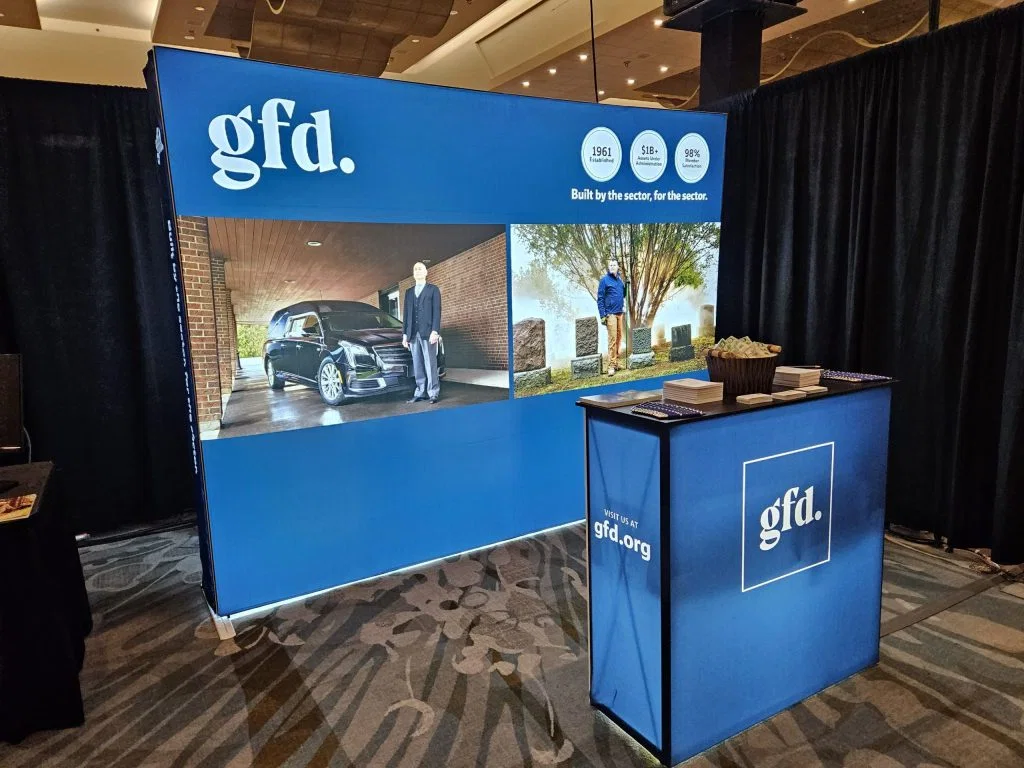
Portable trade show displays are about mobility. The useful note is compact transport, quick setup, and a display package that travels without dragging along heavy infrastructure.
The advantage is speed: lighter freight, simpler handling, and a display that can be opened quickly without a large field crew.
That keeps it distinct from a modular booth system designed around flexible structural components.
Execution priorities for Portable Trade Show Displays
- Mobility and quick setup
- Compact shipping and light carrying burden
- Fast repeat use with minimal field complexity
What drives the Pensacola calendar
Scope gets tighter; standards don't.
Pensacon as a three-day signature event that draws tens of thousands to downtown Pensacola and operates across multiple venues, confirming real demand for coordinated downtown, venue-to-venue event execution — a useful reference point when sizing a project.
The buildings that host Pensacola events
Different Pensacola venues mean different floor plans, different labor rules, and different freight realities.
The right building depends on the show: a consumer expo wants open aisles and broad traffic flow; a corporate conference wants controlled breakout space; a brand activation wants a venue that can carry scenic and production without fighting the architecture.
How we're built to run your project
Trade Show Services of Pensacola keeps the work local.
The difference from a national vendor shows up at the dock.
How Pensacola floor operations work
Labor in Pensacola runs venue-by-venue, not citywide.
Arthur R.
The main Pensacola event areas
Pensacola Beach and Santa Rosa Island covers Pensacola Beach, FL, Gulf Breeze, FL, Tiger Point, Gulf Breeze, FL, Midway, FL. Beach resorts and waterfront hotels dominate this cluster.
University and Northeast Pensacola runs across Cordova Park, Pensacola, FL, Scenic Heights, Pensacola, FL, Ferry Pass, FL. The UWF Conference Center and airport-adjacent commercial areas give this cluster value for academic events, training programs, and buyers who want easier suburban access than the downtown core.
Line items on a typical project
The displays projects typically include design work, fabrication or rental sourcing, graphics production, show-service paperwork, freight, install, show-hours coverage, and strike.
Out of scope by default are show organizer fees, booth lease costs paid directly to the show, staff travel and per diems, and any custom software or data-capture tooling the client runs on its own stack. Those stay on the client side and plug into the project through coordination, not rebilling.
How a project runs
Venue coordination comes next.
Install days are owned by a single on-site lead.
During show hours, the booth is a live operating space.
That document drives the next booking.
What it costs and how fast it moves
Cost scales with how it is built, how big it is, what the venue charges for its own services, what the graphics look like, how far the crates travel, and how many days the team stays on-site.
Lead time drives everything. Custom: 16 to 20 weeks. Rental: 8 to 12.
How project performance gets measured
Trade show ROI is measured at the lead and pipeline level.
A week after the show, the booth's actual floor performance is already clearer than any pre-show projection. We document those observations alongside the technical closeout so the next cycle inherits real signal, not nostalgia.
Frequently asked questions
Do you work at SpringHill Suites Pensacola Beach?
Yes.
How does labor work in Pensacola?
It runs venue by venue.
How much lead time is ideal?
Custom builds run best with 16 to 20 weeks of lead time. Rentals take 8 to 12 weeks.
What information kicks off a project?
The show, the venue, the booth number, the dates, and a target budget range. From those, an initial scope and a realistic cost come back within a few days.
Who runs the booth on-site?
One named show-site lead runs the install, the show hours, and the strike. That person carries the floor plan and the punch list from crates to doors and reports up once a day.
Can the booth travel to the next city on our calendar?
Same structure, swappable graphics, standard crates.
What happens if something breaks during show hours?
The on-site lead handles it.